
If you want a yard full of color the moment winter loosens its grip, the work happens now — not in spring. Tulips, daffodils, crocuses, and alliums all need a cold spell underground before they’ll bloom, which means fall planting is the only way to get that early spring payoff.
Here’s what you need to know to get it right in Fairfield County.
When to Plant
Timing depends on where you are in the county. Coastal towns like Darien, Rowayton, Old Greenwich, and Southport sit in the warmer end of our hardiness zone range, thanks to the moderating effect of Long Island Sound — you can plant into mid-to-late November. Inland areas like Ridgefield, Wilton, and Weston should aim for early-to-mid October, before the ground firms up for winter.
The general rule: get bulbs in the ground after summer heat has faded but at least a few weeks before the soil freezes solid. That gives roots time to establish before winter dormancy sets in.
What to Plant
A few reliable performers for our area:
Daffodils are the low-maintenance workhorse — deer and squirrels leave them alone, and they naturalize well, meaning they’ll spread and return stronger each year.
Tulips bring the boldest color but are a favorite snack for deer and squirrels; if wildlife is a problem on your property, plant them close to the house or protect them with wire mesh.
Crocuses are the earliest to bloom, often pushing through late snow, and work beautifully naturalized in lawn areas.
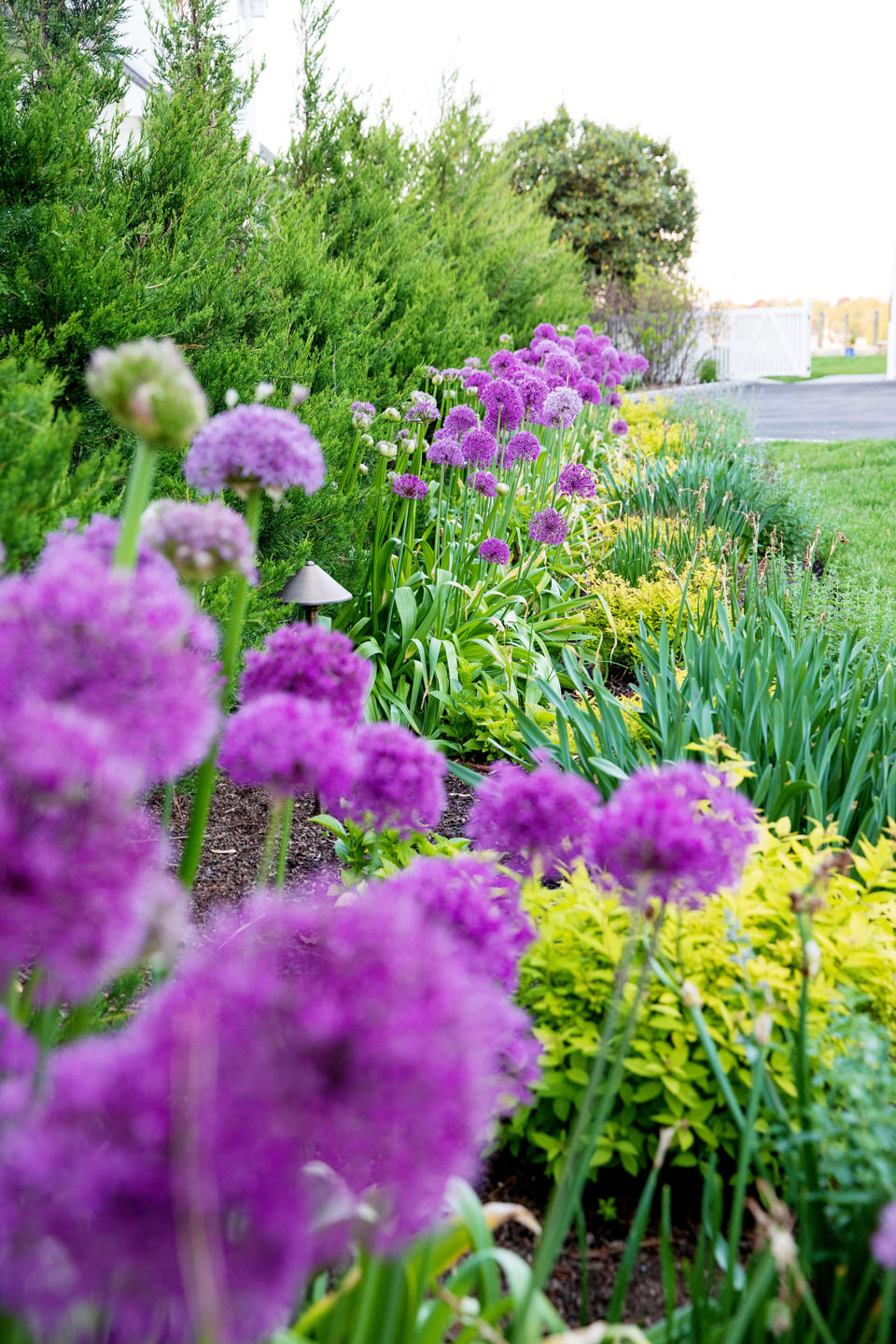
Alliums bloom later in spring, add architectural height, and are one of the few bulbs deer and squirrels reliably avoid.
How to Plant for a Natural Look
Skip the straight rows. Bulbs read as far more natural — and more intentional — when planted in loose drifts or clusters of odd numbers (5, 7, 9). A simple trick: toss a handful of bulbs gently across the planting area and plant them roughly where they land.
As a general depth guide, plant bulbs about three times as deep as the bulb is tall, pointed end up, in well-drained soil. Soggy soil is the most common reason bulbs rot instead of bloom, so if your beds hold water, consider raised beds or amending with compost before planting.
Plan for What Comes After
The bulb bed that looks empty in June is a common design mistake. Pairing spring bulbs with emerging perennials — hostas, daylilies, or ornamental grasses — means something is filling in as the bulb foliage dies back, so the bed never looks bare or messy mid-season.
Ready for Fall Planting?
Whether you’re starting a new bed or adding depth to an established garden, fall is the window — and it’s closing faster than it feels. If you’d like help planning a bulb layout that fits your property and stays low-maintenance year to year, get in touch and we’ll walk through it together.